How to Choose the Best Playing Card Manufacturer for Your Brand
Learn how to choose the best playing card manufacturer for your brand. Discover key factors like card stock, finishes, packaging, turnaround time, and customization options.
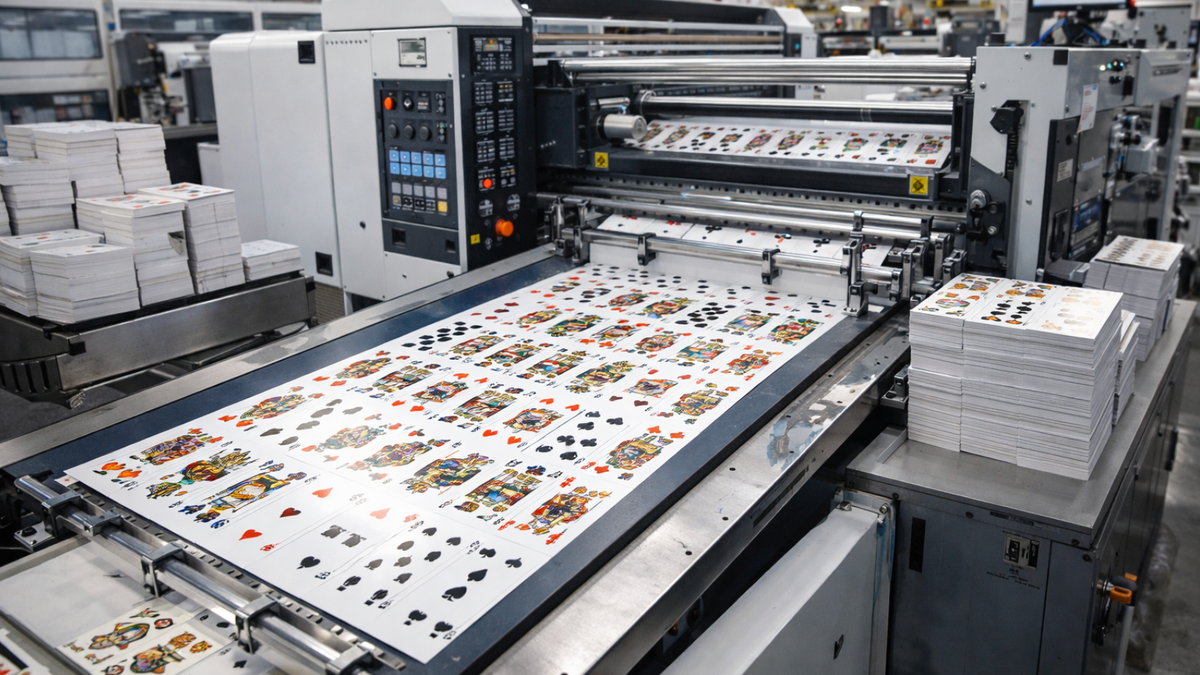
Choosing the right playing card manufacturer is one of the most important decisions you’ll make when creating a custom deck. Whether you're launching a new card game, building a brand, or producing promotional products, the manufacturer you choose directly impacts quality, cost, and customer experience.
From materials and finishes to packaging and production capabilities, this guide will walk you through how to select a partner that helps your brand stand out.
Why Choosing the Right Playing Card Manufacturer Matters
Your Product Quality Depends on the Manufacturer
No matter how strong your concept or artwork is, your final product is only as good as the manufacturer producing it. The quality of the card stock, print clarity, and finishing all determine how your deck looks and feels in the hands of customers.
Well-known companies like the United States Playing Card Company and Cartamundi poker cards have built their reputations on consistency and durability — and your goal should be to find a manufacturer that can deliver similar reliability for your project.
Manufacturing Impacts Brand Perception and Customer Experience
Your cards represent your brand. If the edges fray, colors fade, or the cards don’t shuffle smoothly, customers will notice immediately.
High-quality packaging, smooth finishes, and durable materials elevate the perceived value of your deck. Whether you're selling retail products or distributing promotional cards, the manufacturing quality directly affects how your audience views your brand.
The Role of a Reliable Partner in Scaling Your Business
As your project grows, your manufacturer becomes more than just a printer — they become a partner. Reliable game card manufacturers help you scale from small runs to larger production without sacrificing quality.
They support your growth with consistent production timelines, flexible order quantities, and the ability to scale as demand increases.
Step 1 – Understand Your Project Needs
Type of Deck: Standard, Custom Game, Tarot, or Promotional Cards
Start by identifying what type of deck you’re creating. Are you producing:
- A traditional poker or standard playing card deck?
- A custom card game with unique mechanics?
- A tarot or oracle deck?
- A branded promotional product?
Each type of project may require different specifications, materials, and production methods. For example, a collectible or fantasy-inspired deck may benefit from premium finishes, while promotional decks may prioritize cost-efficiency.
Quantity, Budget, and Timeline Expectations
Before reaching out to a manufacturer, define:
- Your desired order quantity
- Your available budget
- Your production timeline
Some poker card manufacturers specialize in large-scale production, while others offer flexible or print-on-demand options for smaller runs. Knowing your numbers upfront helps you choose the right partner.
Target Audience and Intended Use
Think about who will be using your cards:
- Casual players
- Collectors
- Businesses or clients
- Event attendees
If your deck will be used frequently, durability and material choice — such as coated paper or plastic cards — become critical. For collectors, visual quality and finish may matter more.
Step 2 – Evaluate Material and Print Quality
Card Stock Options (Paper vs. Plastic)
The foundation of any deck is its card stock. Most manufacturers offer:
- Paper card stock: The traditional choice, offering a familiar feel and good flexibility
- Plastic cards: More durable, waterproof, and resistant to wear
Paper is ideal for most applications, while plastic works well for decks that need to withstand heavy use or outdoor environments.
Finishes: Matte, Gloss, Linen, Foil, and UV Coating
Finishes enhance both the appearance and performance of your cards:
- Matte: Smooth, modern, and glare-free
- Gloss: Bright and reflective, enhancing colors
- Linen: Textured for better grip and shuffling
- Foil: Adds metallic highlights for premium appeal
- UV coating: Protects the surface and improves durability
These finishing options can dramatically change how your deck feels and performs during gameplay.
Durability, Shuffling Feel, and Long-Term Use
A great deck should feel smooth during shuffling and hold up over time. Cards that bend easily or stick together will frustrate users and hurt your brand reputation.
Testing samples from potential poker card manufacturers is one of the best ways to evaluate durability, finish, and handling before committing to a full production run.
Step 3 – Review Customization Capabilities
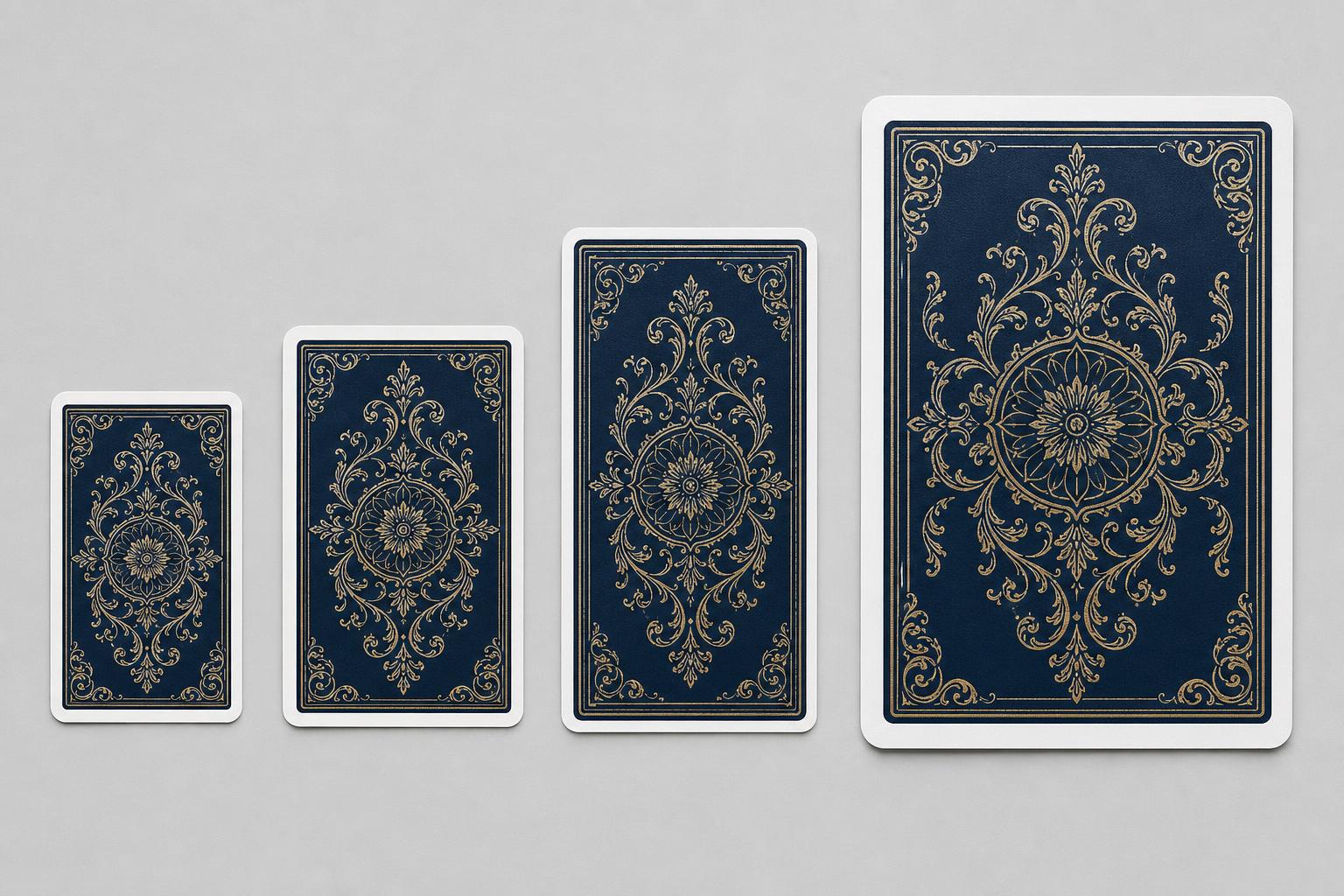
Card Size, Shape, and Design Flexibility
Customization is key to making your deck stand out. Look for manufacturers that support:
- Standard and custom card sizes
- Unique shapes or die-cut designs
- Full front and back customization
This flexibility allows your card game or branded deck to feel unique rather than generic.
Packaging Options: Tuck Boxes, Rigid Boxes, and Accessories
Your packaging is often the first thing customers see. Options include:
- Standard tuck boxes
- Premium rigid boxes
- Sleeves, tins, or display cases
Well-designed packaging enhances your product’s presentation and protects the cards during shipping and storage.
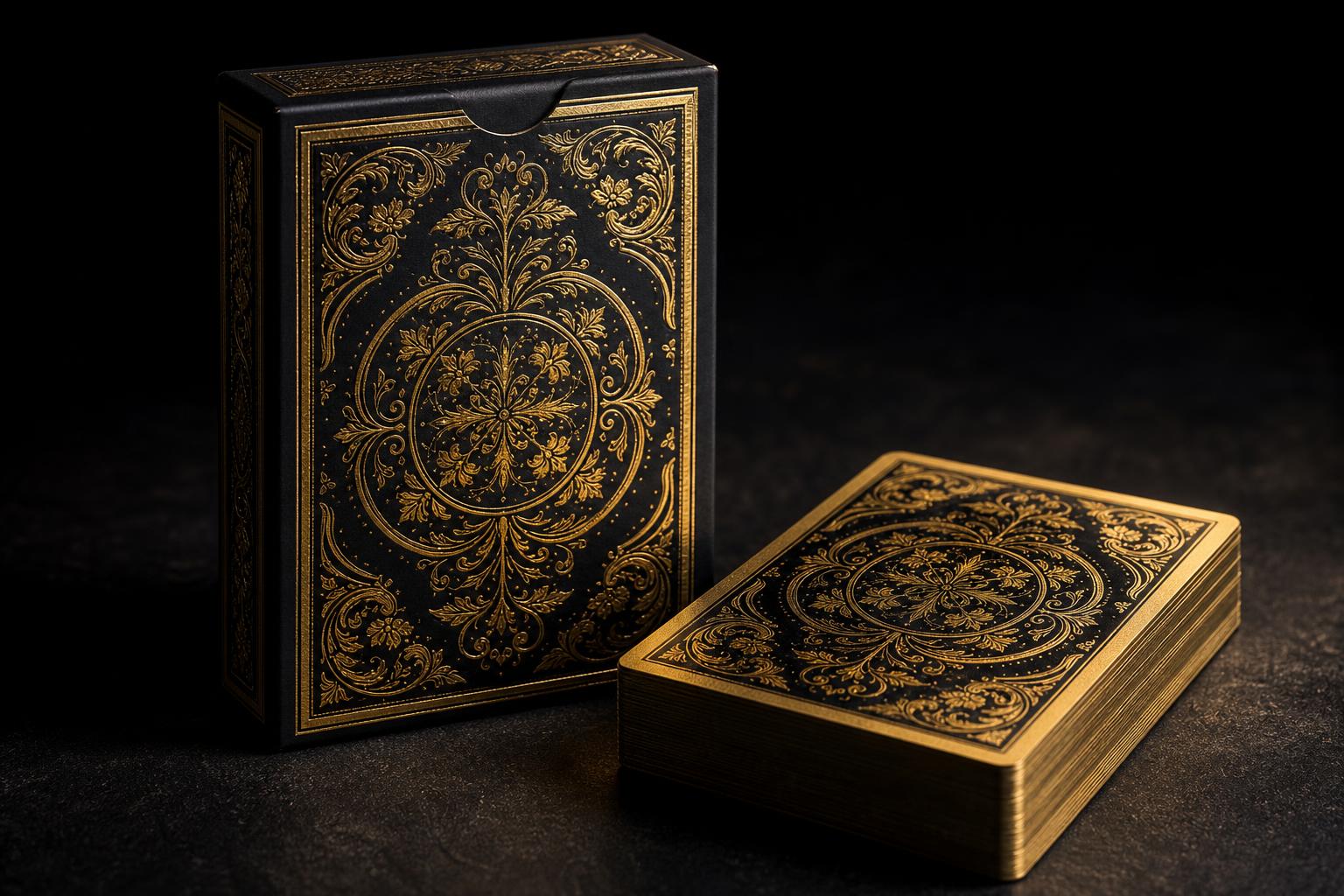
Specialty Features: Foil Stamping, Embossing, and Spot UV
Premium features like foil stamping, embossing, and spot UV can elevate your deck from standard to standout.
These enhancements are especially useful for high-end products, collector decks, or branded items where visual impact is critical.
Step 4 – Check Design Support and File Requirements
Templates, Online Design Tools, and File Upload Options
A strong playing card manufacturer should make the design process easier — not harder. Look for providers that offer:
- Downloadable templates with bleed and safe zones
- Online design tools for quick customization
- Simple file upload systems
These tools are especially helpful if you’re not a professional designer but still want polished results. The easier it is to set up your files, the fewer issues you’ll encounter during production.
Accepted File Formats (PDF, AI, PSD, PNG)
Most manufacturers accept standard file types such as:
- PDF for print-ready layouts
- AI for vector-based designs
- PSD for layered artwork
- PNG for high-resolution images
Using the correct format ensures your artwork prints accurately and maintains the quality your brand requires.
Prepress Checks, Proofing, and Sample Decks
Before committing to a full run, always confirm that your manufacturer offers:
- Prepress file checks
- Digital proofs
- Physical sample decks
This step helps catch alignment, color, or formatting issues early. It’s a critical safeguard — especially when working with new game card manufacturers or launching a new product.
Step 5 – Compare Production and Fulfillment Options
minimum order Quantities vs. Print-on-Demand
Some manufacturers require large minimum orders, while others offer flexible or print-on-demand services.
- Bulk production: Lower cost per deck, ideal for large launches
- Print-on-demand: Perfect for testing ideas or smaller batches
Choosing the right option depends on your budget and business goals. Many modern poker card manufacturers now offer both to accommodate different stages of growth.
Turnaround Time and Production Speed
Production speed matters — especially if you’re preparing for a launch, event, or crowdfunding campaign.Typical turnaround time ranges from:
- 2–4 weeks for most standard orders
- 3–5 weeks for larger or more complex orders
Always confirm timelines upfront to avoid delays.
Shipping, Fulfillment, and Global Delivery
If you plan to sell your cards, consider whether your manufacturer offers:
- Direct shipping to customers
- Bulk delivery to your location
- International shipping options
Reliable fulfillment is essential for scaling your business and reaching a global audience.
Step 6 – Evaluate Customer Service and Reliability
Communication, Support, and Responsiveness
Good communication can make or break your experience. A reliable manufacturer should:
- Respond quickly to inquiries
- Provide clear instructions and updates
- Offer real support — not just automated responses
This is especially important when troubleshooting file issues or coordinating production timelines.
Transparent Pricing and No Hidden Fees
Look for clear, upfront pricing that includes:
- Printing costs
- Packaging options
- Shipping fees
Avoid manufacturers with unclear pricing structures or unexpected add-ons. Transparency helps you plan your budget and maintain profitability.
Reviews, Testimonials, and Industry Reputation
Before committing, research the manufacturer’s reputation:
- Customer reviews
- Case studies or testimonials
- Past client work
Established names like the United States Playing Card Company or Cartamundi poker cards are known for quality — but many newer manufacturers offer similar capabilities with more flexibility and customization.
Where to Find a Trusted Playing Card Manufacturer
What Sets Professional Manufacturers Apart
Top-tier manufacturers stand out by offering:
- High-quality card stock and finishes
- Flexible order quantities
- Advanced customization options
- Reliable production and delivery
They don’t just print — they help bring your vision to life.
Why Mr. Playing Card Is a Strong Choice for Brands
Mr. Playing Card stands out as a flexible, creator-friendly playing card manufacturer, offering a powerful combination of quality, flexibility, and ease of use. Their platform is designed for both beginners and experienced creators, offering:
- No minimum order quantities
- Professional-grade materials and finishes
- Custom sizes and full design flexibility
- Reliable production and consistent quality
Whether you’re launching a new card game, building a brand, or creating a custom deck for promotion, they provide the tools you need to succeed.
Tools, Templates, and Support for Growing Businesses
With built-in templates, easy uploads, and helpful support, Mr. Playing Card makes the process simple. You can:
- Upload your designs and preview them instantly
- Order a prototype before scaling
- Produce high-quality decks with confidence
This combination of tools and support makes them an ideal partner for both small creators and growing businesses.
Conclusion
Choosing the right playing card manufacturer is about more than just printing — it’s about working with a partner who can execute your vision with precision and consistency.
From selecting the right card stock and finishes to ensuring reliable production and professional packaging, every detail matters. The right manufacturer will help you deliver a product that not only looks great but performs well and represents your brand at the highest level.
With the right partner, your cards can stand out in a competitive market — whether you're creating a game, a promotional tool, or a collectible product.
Ready to Create Your Custom Playing Cards with Confidence?
Visit Mr. Playing Card to explore professional templates, premium materials, and flexible printing options designed for creators and brands of all sizes. Whether you’re producing a single prototype or scaling to larger orders, you’ll have the tools and support needed to bring your vision to life.
Start your custom playing card project today — and work with a manufacturer that helps your brand stand out.
FAQs (Frequently Asked Questions)
What should I look for in a playing card manufacturer?
Look for quality materials, customization options, reliable turnaround time, strong customer support, and transparent pricing.
What’s the minimum order quantity for custom decks?
It varies by manufacturer. Some require large bulk orders, while others offer no minimums or print-on-demand options.
Can I order a sample before full production?
Yes. Many manufacturers offer prototype decks or samples so you can review quality before committing to a full order.
What materials are best for playing cards?
High-quality paper card stock is the most common, while plastic offers added durability for heavy use.
How long does it take to manufacture custom playing cards?
Production typically takes 2–5 weeks depending on order size, complexity, and finishing options.